Modeling how HIV and tuberculosis behave — cell by cell, patient by patient.
I'm Alexis Hoerter, PhD. I build agent-based mechanistic models of virtual cells for infectious disease, calibrate them against wet-lab and clinical data, and run them at scale on HPC. I use AI to produce the scripts and graphs that turn those results into something readable and reusable.










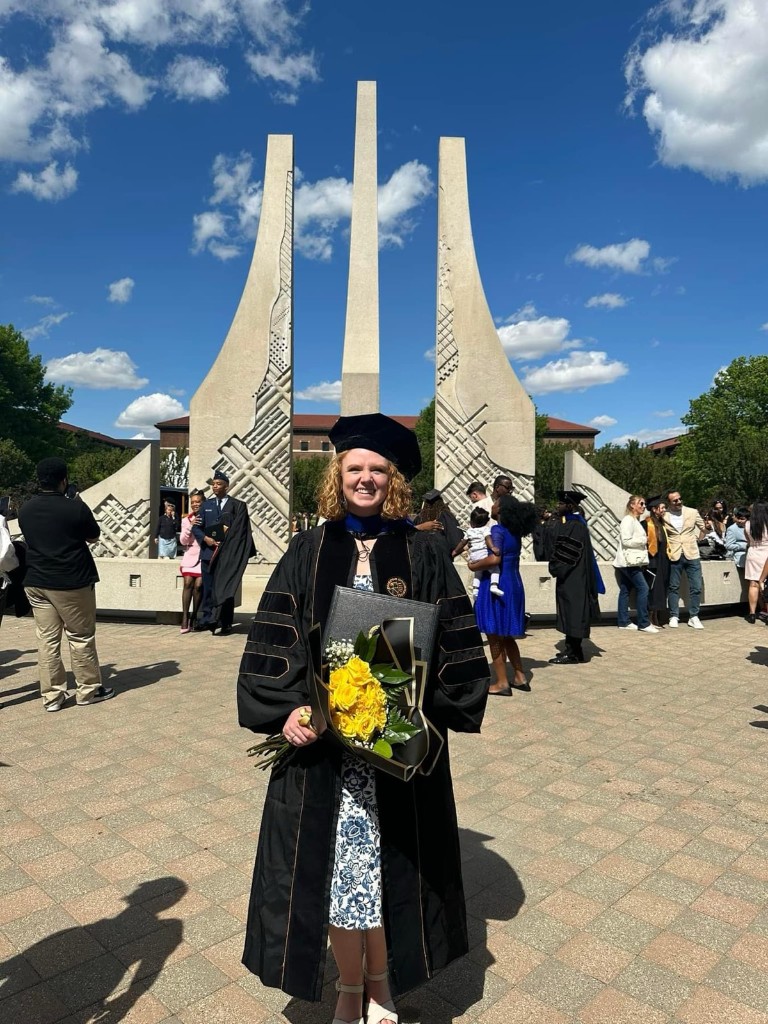
About
My work sits at the intersection of infectious disease biology, quantitative modeling, and data engineering. During my PhD and postdoc at Purdue's Weldon School of Biomedical Engineering, I built cellular-scale agent-based models of Mycobacterium tuberculosis, HIV, and their coinfection — calibrated against in vitro data from the Schlesinger lab (Texas Biomed) and pediatric immune activation datasets from the Indiana School of Medicine.
At Astellas Pharma, I brought my knowledge of stochasticity to industry — using stochastic differential equations, instead of the traditional ordinary differential equations with random parameter distributions, on physiologically-based pharmacokinetic (PBPK) models to generate virtual patient populations that capture real-world patient variability.
Mechanistic modeling of virtual cells by hand is my main passion and using AI for practical analysis tooling to produce the scripts and graphs that make results readable and reusable helps me make the most of my time.
Experience
Download CV2024 – 2025
Postdoctoral Researcher
Purdue University, Weldon School of Biomedical Engineering
PBPK modeling of oral vs inhaled TB treatment routes to understand the effect of drug delivery on bacterial distribution in granulomas in the lungs.
2019 – 2024
PhD, Biomedical Engineering
Purdue University
Dissertation on agent-based modeling of TB, pediatric HIV, and TB–HIV coinfection; first-author work in mSystems and Frontiers in Immunology.
Summer 2022
PBPK Modeling Intern
Astellas Pharma
Three-month internship building virtual patient populations using SDE-based PBPK models, benchmarked against traditional ODE + LHS approaches.
What I work on
All research →Agent-based modeling
Cellular-scale simulations of granuloma formation, macrophage phagocytosis, T-cell proliferation, and pathogen dynamics.
PBPK & virtual patients
MATLAB / SimBiology models of drug distribution, extended with SDEs and Latin Hypercube Sampling to quantify variability.
Scripts & graphs
Mechanistic models by hand; AI for scripts and graphs that make results readable.